Why there is no single answer for every baby
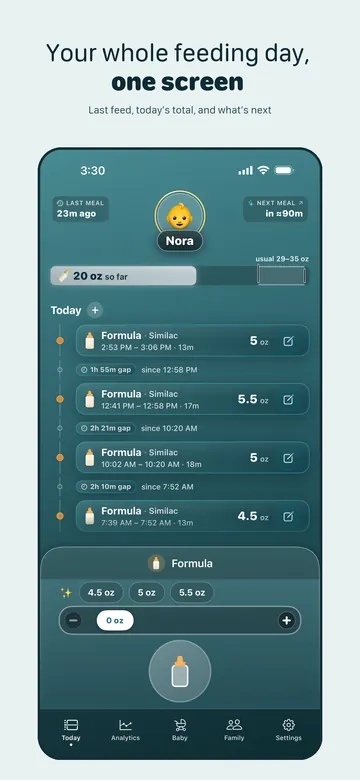
Breastfed babies, mixed-fed babies and formula-fed babies can have different supplement guidance. Formula itself is fortified, and the amount consumed can affect a national recommendation.
For example, the UK NHS publishes separate advice for breastfed babies, babies consuming infant formula, and older children on its vitamins for children page. That is UK guidance, not a global dosage rule. Use the recommendation for your country and your child.
What Feed Flow can keep track of
- When you record a vitamin D supplement or drops.
- The vitamin D listed on the formula product label.
- Formula amounts that contribute to the day's nutrition record.
- A history you can show a health visitor, pharmacist or pediatrician.
The vitamin D meter shows the amount counted so far and what remains toward the daily reference. The app does not scan a bottle, independently verify a label or know what was actually absorbed; the records depend on what you enter.
What Feed Flow deliberately does not do
Feed Flow does not recommend a supplement, calculate a dose, assess a deficiency or decide whether your baby needs drops. It also does not check supplement interactions.
Use the supplement label and advice from a qualified professional. If you are unsure whether two products contain overlapping vitamins, ask a pharmacist or clinician before combining them.
A simple routine for a better appointment
- Keep the supplement name and the times you give it in the health record.
- Enter nutrition exactly as printed on the formula label.
- Record formula and mixed feeding consistently enough to show the real routine.
- Bring the products or their labels and your Feed Flow history to the appointment.
The goal is not a perfect nutrition score. It is an accurate answer when someone asks, “What does your baby usually receive?”