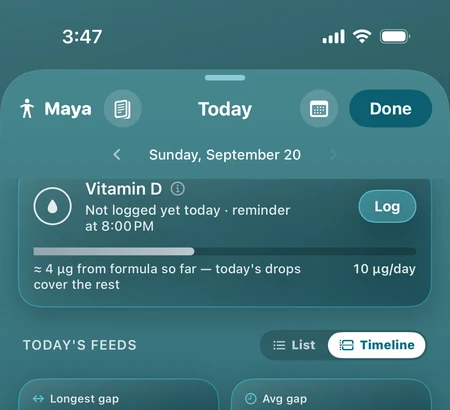
Automatic vitamin D calculations from drops and formula
Feed Flow combines two sources in one daily readout: the supplement drops you log and the vitamin D carried by today's formula feeds. Formula is calculated from the feed amount and the vitamin D value read from the label. Known products are filled in from our catalogue, so check them against your tin.
- Logged drops contribute the dose you recorded.
- Formula contributes according to actual consumed amounts and your label's per-100 ml value.
- The card separates formula and drops so the total has an understandable source.
- If a formula has no label value entered, the app discloses that it is not counted rather than guessing.
Breast milk is not assigned an estimated vitamin D contribution. Feed Flow does not invent a fortification value for a brand.
See what remains toward the daily reference
The meter uses 10 µg / 400 IU per day as the reference for a baby's first year, the figure the American Academy of Pediatrics, Helsedirektoratet and ESPGHAN give. It can show the counted amount so far, what remains toward that reference, and when your planned drops will cover the rest.
This is arithmetic against a printed reference, not a judgement that your baby is deficient, adequately supplemented or receiving the right dose. Recommendations differ by feeding method, formula intake, age and country.
Use the supplement label and advice from your pediatrician, pharmacist or child health service. Feed Flow does not prescribe a dose, assess a deficiency or check interactions.
A daily log and optional reminder that stays gentle
Mark today's drops with one tap and see when they were logged. An optional reminder helps you remember, while a simple streak can make the routine visible without turning a missed day into a failure.
Caregivers can see the same record through the shared baby log, reducing the chance that anyone has to ask whether the drops were already given.
Official guidance stays one step away
For an example of feeding-specific national advice, the UK NHS explains vitamin supplements for babies and children. The US CDC provides separate guidance for breast milk, mixed feeding and infant formula.
Those sources illustrate why a universal automatic dose would be inappropriate. Use the recommendation for your country and your child.
Read the vitamin D tracking guide