The short answer
The AAP and the WHO point to about 6 months. The AAP says babies younger than that should only drink breast milk or formula. The WHO says exclusive breastfeeding for the first 6 months means only breast milk, not even water. The NHS says fully breastfed babies need no water until they have started eating solid foods. From 6 to 12 months, the CDC and the AAP both give the same figure: 4 to 8 ounces of water a day. Milk stays the main drink for the whole first year.
Why babies under 6 months do not need water
The AAP says it plainly: infants under 6 months should only drink breast milk or formula, and additional water is not recommended at this age. On its formula preparation page it adds one exception: unless a pediatrician specifically advises otherwise.
The WHO recommends exclusive breastfeeding for the first 6 months, meaning no other foods or liquids, including water. Its definition lists the exceptions: oral rehydration solution, and drops or syrups of vitamins, minerals or medicines.
The NHS says fully breastfed babies do not need any water until they have started eating solid foods.
The risk the AAP names
The AAP warns that feeding water on top of breast milk or formula, or watering formula down, can lead to a dangerous condition called water intoxication. Extra water means fewer nutrients, which can slow growth. It also upsets the balance of calcium, sodium and potassium in the body, which can lead to major health problems, including seizures.
The CDC's formula page looks at both sides. Too much water may mean the formula does not meet your baby's nutritional needs. Too little water may make your baby's kidneys and digestive system work too hard, which can make your baby dehydrated. The CDC says to use the amount of water listed on the container.
How much water from 6 to 12 months
Here is what each source says for this age. The ml figures are our conversion of the ounces, rounded.
| Source | What it says for 6 to 12 months | In ml |
|---|---|---|
| CDC | Water, 4 to 8 ounces a day | about 120 to 240 ml a day |
| AAP | 4 to 8 oz a day, which it also writes as 0.5 to 1 cup a day | about 120 to 240 ml a day |
| NHS | Sips of water from a cup or beaker with meals. It gives no daily amount. | no figure given |
The AAP's drinks guide explains why the amount is small. At this age water is unlikely to replace much breast milk or formula. Its job is to help a baby learn to drink from a cup and get used to the taste. The AAP also notes that fluoridated tap water helps prevent tooth decay later on.
The NHS says drinking water for babies over 6 months does not need to be boiled first.
Cup or bottle?
Both the US and UK sources lean toward a cup for water.
- AAP: offer a cup when your baby starts solid foods, usually around 6 months. A sippy cup, a cup with a straw or an open cup are all fine. If you use a sippy cup, the AAP suggests one with no valve, because a valve makes a baby suck as if from a bottle. It describes the move off bottles finishing sometime between 12 and 18 months (From Bottle to Cup).
- NHS: an open cup or a free-flow cup without a valve helps a baby learn to sip and is better for their teeth. Once a baby is 1 year old, feeding from a bottle should be discouraged. In a bottle or trainer cup, the NHS says to put nothing but breast milk, formula or water.
What about hot weather?
This is where the sources differ. The NHS says breastfed babies may want to breastfeed more than usual in hot weather. It also says formula-fed babies under 6 months may need small sips of cooled boiled water during hot weather, as well as their usual milk feeds. The AAP and WHO pages cited here give no hot-weather exception for babies under 6 months.
Know the signs of dehydration either way. The AAP lists fewer wet diapers (it gives 6 to 8 as the typical range), being overly sleepy, a sunken soft spot on the head and no tears when crying. It says that if you are worried your infant is not getting enough to drink, call your pediatrician immediately.
The NHS dehydration page says to ask for an urgent GP appointment or call NHS 111 if your baby has fewer wet nappies, few or no tears, or a sunken soft spot. It says to call 999 or go to A&E if there are signs of dehydration and the skin is blue, grey, pale or blotchy, the skin feels cold, breathing is difficult or very fast, or the child is confused or sleepier than normal or difficult to wake.
Water for making formula
Water mixed into formula is part of the feed. It is not extra water. The advice on how to treat it differs between the US and the UK.
- CDC: most of the time it is safe to mix powdered formula with tap water, filtered or unfiltered, following the instructions on the container. Measure the water first, then add the powder. For babies younger than 2 months, born prematurely or with a weakened immune system, boil the water and wait about 5 minutes before mixing. The CDC says bottled water is safe to use to mix powdered infant formula, and to use it if your tap water may be unsafe, until local authorities say the tap water is safe.
- AAP: never add water to ready-to-feed formula. Use water for powder and concentrated liquid formula only as directed. For babies younger than 2 months, born prematurely or with a weakened immune system, the AAP says boiled water should be used, then left to cool for about 5 minutes.
- NHS: use freshly boiled tap water, left to cool for no more than 30 minutes so it stays at least 70C. Bottled water is not usually recommended, because it is not sterile and may contain too much sodium or sulphate (How to make up baby formula).
For storage times and the rest of safe preparation, see our guide to formula safety.
Juice in the first year
The AAP recommends no fruit juice for infants under 12 months. It says juice offers no nutritional benefit at this age, can raise the risk of tooth decay and can build a preference for sweeter flavors over plain water. The CDC says children younger than 12 months should not drink any fruit or vegetable juice.
The NHS says babies under 12 months do not need fruit juice or smoothies. If you choose to give them, it says to dilute them one part juice to 10 parts water and keep them to mealtimes. So the US sources say no juice before 12 months, while the NHS says it is not needed and describes how to give it if a family does.
How Feed Flow helps with this
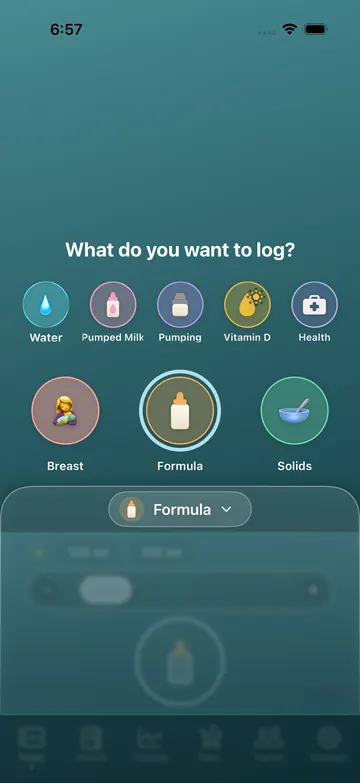
Once water starts, it is one more thing to remember across a day, and across everyone who feeds your baby. In Feed Flow you can log water, and it appears in the day's timeline, shown separately from the milk total. The milk total counts formula, pumped milk and nursing (nursing as an estimate), so sips of water at lunch never make the milk look bigger than it was. See how the day's view works on the breastfeeding and pumping page.
What it cannot do: Feed Flow gives no advice about water. It is a record of what happened. The figures above come from the CDC, AAP, NHS and WHO, and your baby's doctor knows your baby.
Sources
- CDC, Foods and Drinks to Encourage, checked November 2026
- CDC, Foods and Drinks to Avoid or Limit, checked November 2026
- CDC, Infant Formula Preparation and Storage, checked November 2026
- AAP (HealthyChildren.org), Choose Water for Healthy Hydration, checked November 2026
- AAP (HealthyChildren.org), Recommended Drinks for Children Age 5 & Younger, checked November 2026
- AAP (HealthyChildren.org), How to Safely Prepare Baby Formula With Water, checked November 2026
- AAP (HealthyChildren.org), From Bottle to Cup: Helping Your Child Make a Healthy Transition, checked November 2026
- AAP (HealthyChildren.org), Where We Stand: Fruit Juice for Children, checked November 2026
- NHS, Drinks and cups for babies and young children, checked November 2026
- NHS, How to make up baby formula, checked November 2026
- NHS, Dehydration, checked November 2026
- WHO, Exclusive breastfeeding for optimal growth, development and health of infants, checked November 2026
- WHO, Breastfeeding, checked November 2026