The short answer
The CDC says freshly pumped milk can stay at room temperature, 77°F or colder, for up to 4 hours. In the fridge it keeps for up to 4 days. In the freezer, about 6 months is best and up to 12 months is acceptable.
Two other times matter just as much. Thawed milk that has reached room temperature or been warmed should be used within 2 hours. Milk left in the bottle after a feed should be used within 2 hours, then thrown away.
The UK's NHS gives different numbers for some of these, and we show them side by side below.
Storage times at a glance
These are the numbers each organization publishes for healthy babies at home. The Academy of Breastfeeding Medicine (ABM) writes its protocol for full-term infants, and gives a best time and a longer time for very clean conditions.
| Where the milk is | CDC (US) | ABM | NHS (UK) |
|---|---|---|---|
| Freshly pumped, room temperature | Up to 4 hours at 77°F or colder | 4 hours best, 6 to 8 hours in very clean conditions, at 60 to 85°F (16 to 29°C) | No time given |
| Fridge | Up to 4 days | 4 days best, 5 to 8 days in very clean conditions, at 39.2°F (4°C) | Up to 8 days at 4°C or lower; within 3 days if you are unsure of the temperature or it runs 5 to 10°C |
| Ice compartment of a fridge | Not listed | Not listed | 2 weeks |
| Freezer | About 6 months best, up to 12 months acceptable | 6 months best, 12 months acceptable | Up to 6 months at -18°C or lower |
| Cooler bag with ice packs | Up to 24 hours when traveling | 24 hours at 59°F (15°C), from very few studies | Up to 24 hours, for milk already cooled in the fridge |
| Thawed in the fridge | Use within 24 hours of fully thawing | Once thawed for 24 hours, no more than 2 hours at room temperature | Use straight away |
| Left in the bottle after a feed | Use within 2 hours, then discard | Discard within 1 to 2 hours after the baby finishes | Use within 1 hour, then throw away |
How long can freshly pumped milk sit out?
The CDC's limit is up to 4 hours, as long as the room is 77°F (25°C) or colder.
The ABM gives 4 hours as the best time for rooms of 60 to 85°F (16 to 29°C). It says warmer rooms make bacteria in stored milk grow faster, and that 4 hours may be a reasonable limit at 27 to 32°C (about 81 to 90°F).
The ABM says 6 to 8 hours may be reasonable for very clean milk in a cooler room. It adds that it is best to chill the milk as soon as possible if you will not use it in that time.
The NHS page on expressing and storing milk does not give a room temperature time at all. It goes straight to the fridge.
How long does breast milk last in the fridge?
The CDC says up to 4 days. If you don't think you will use the milk in that time, the CDC says to freeze it right away.
The NHS says up to 8 days in the back of the fridge at 4°C or lower. If you are not sure how cold your fridge is, or it runs between 5 and 10°C, the NHS says to use the milk within 3 days. This is the biggest difference between the US and UK advice. The NHS ties the longer time to a known fridge temperature.
The ABM sits in between: 4 days is best, and 5 to 8 days is possible in very clean conditions.
How long does frozen breast milk last?
The CDC says about 6 months is best and up to 12 months is acceptable. It explains that freezing keeps food safe almost indefinitely, but the storage times are about quality. The ABM gives the same 6 and 12 months.
The NHS says up to 6 months in a freezer at -18°C or lower, or 2 weeks in the ice compartment of a fridge.
Some practical points from the same pages:
- Label it. The CDC says to label milk with the date it was expressed. The NHS says to label and date milk before freezing it.
- Store small amounts. The NHS says small amounts help avoid waste. The ABM suggests portions of 15 to 60 mL (about 0.5 to 2 oz).
- Use the right containers. The CDC says to use breast milk storage bags or clean, food grade containers with tight fitting lids.
- Cool fresh milk first. The ABM says not to add warm, freshly pumped milk to milk that is already cooled or frozen.
How long is thawed breast milk good for?
The CDC says milk thawed in the fridge should be used within 24 hours. Start counting when it is completely thawed, not when you took it out of the freezer. Once thawed milk is brought to room temperature or warmed, the CDC says to use it within 2 hours.
The NHS is stricter. It says to defrost milk slowly in the fridge, and once it is defrosted, to use it straight away.
The CDC and NHS agree on two things:
- Do not refreeze thawed milk. The CDC and NHS both say this plainly.
- No microwave. The CDC says never to thaw or heat breast milk in a microwave, because it can destroy nutrients and create hot spots that can burn a baby's mouth. The NHS says not to use a microwave or the stove.
The ABM takes its own position on refreezing. It says there is too little research to make any recommendation.
To thaw faster, the CDC and NHS both mention warm water or warm running water. The CDC also says breast milk does not need to be warmed at all. It can be served at room temperature or cold.
What about milk left in the bottle after a feed?
The ABM explains why leftovers have their own, shorter rule. Once a baby starts drinking, some bacterial contamination occurs in the milk from the baby's mouth.
- CDC: if your baby did not finish the bottle, use the leftover milk within 2 hours. After 2 hours, discard it.
- ABM: it seems reasonable to discard the rest within 1 to 2 hours after your baby finishes feeding. It notes there is not enough research to be more exact.
- NHS: once your baby has drunk from the bottle, use it within 1 hour and throw away anything left over.
So the US says 2 hours and the UK says 1 hour. For more on giving breast milk by bottle, see our guide to paced bottle feeding.
How Feed Flow helps with this
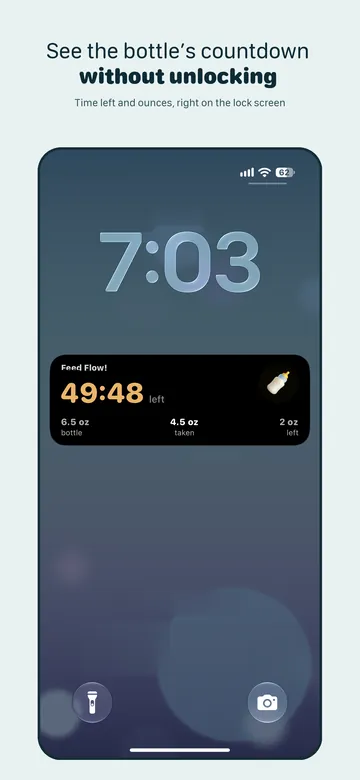
Feed Flow's bottle countdown runs from when you make the bottle and stays on your iPhone Lock Screen. The default is two hours for pumped milk and one hour for formula, and you can change either in Settings.
Here are the source windows next to that default, so you can set the timer to the one you follow:
- App default for pumped milk: 2 hours from when the bottle is made.
- CDC, fresh milk at room temperature: up to 4 hours.
- CDC, thawed milk once warmed or at room temperature: within 2 hours.
- NHS, after your baby drinks from the bottle: within 1 hour.
The countdown is for a bottle you have made. It does not cover milk in the fridge or freezer.
The countdown is a memory aid, not a safety sensor. The pumping log keeps what you expressed next to what your baby took.
Sources
- Centers for Disease Control and Prevention (CDC): Breast Milk Storage and Preparation, checked November 2026.
- Academy of Breastfeeding Medicine: ABM Clinical Protocol #8: Human Milk Storage Information for Home Use for Full-Term Infants, Revised 2017, checked November 2026.
- NHS: Expressing and storing breast milk, checked November 2026.